Ever wondered why a perfectly crisp meringue topped with juicy berries feels like a celebration on a plate?
In This Article
- Understanding Pavlova: The Science Behind the Meringue
- Step‑by‑Step Pavlova Recipe with Fresh Berries
- Variations to Suit Every Palate
- Pro Tips from Our Experience
- Equipment Comparison: Choosing the Right Oven
- Serving Ideas and Presentation
- Frequently Asked Questions
- Conclusion: Your Next Show‑Stopping Dessert
That fleeting moment of sweet‑tart harmony is what the classic pavlova delivers, and with the right pavlova recipe with fresh berries, you can recreate that magic at home any season. I’ve been perfecting my own version for over a decade, tweaking sugar ratios, oven temps, and berry blends until the texture hits that elusive “crackly outside, marshmallow inside” sweet spot. In this guide I’ll walk you through every step—from selecting the best ingredients to plating a show‑stopping dessert that even your picky‑eater friends will adore.
Understanding Pavlova: The Science Behind the Meringue
Why a Pavlova Is Not Just Another Meringue
At its core, pavlova is a meringue, but the addition of corn‑starch and vinegar creates a stable crust that stays crisp longer. The acid (usually cream of tartar or white vinegar) strengthens the egg‑white proteins, while the starch absorbs moisture, preventing the dreaded soggy center.
Key Ingredients and Their Roles
- Egg whites – 4 large, room‑temperature (about 120 g each). Fresh, free‑range eggs from Caveman’s Farm give the best foam.
- Granulated sugar – 250 g (1 ¼ cups). I prefer Kroger Pure Sugar at $1.09 per lb for its fine crystals.
- Cornstarch – 20 g (2 Tbsp). Bob’s Red Mill is reliable, about $3.49 for a 16‑oz bag.
- White vinegar – 1 tsp (5 ml). A splash of Bragg’s Apple Cider Vinegar adds a subtle depth.
- Vanilla extract – 1 tsp (5 ml). Use Nielsen-Massey Pure Vanilla, $12.99 for 2 oz.
- Whipped cream – 300 ml (1 ¼ cups) heavy cream, chilled.
- Fresh berries – 250 g total (mix of strawberries, blueberries, raspberries, blackberries). Driscoll’s berries cost about $4.99 per pint.
Equipment That Makes a Difference
Investing in a few reliable tools saves time and frustration. A Cuisinart 8‑qt. Food Processor (around $149) whips the egg whites to stiff peaks quickly. For shaping, a Nordic Ware 12‑inch round cake pan with parchment paper (about $22) provides the perfect base.
Step‑by‑Step Pavlova Recipe with Fresh Berries
Preparing the Meringue
- Preheat your oven to 150 °C (300 °F) and place a rack in the middle.
- Line the Nordic Ware pan with parchment; draw a 20‑cm (8‑inch) circle on the paper as a guide.
- Separate egg whites from yolks, ensuring no trace of yolk. Pat the bowl dry with a clean kitchen towel.
- Begin beating on low speed; once foamy, add cream of tartar (½ tsp) and increase to medium.
- Gradually sprinkle the 250 g sugar, a tablespoon at a time, waiting until each batch dissolves before adding the next. The mixture should be glossy and form stiff peaks when the whisk is lifted.
- Fold in the cornstarch, vinegar, and vanilla using a rubber spatula—don’t overmix.
Baking the Pavlova
- Transfer the meringue onto the parchment, smoothing the edges with a spatula. Create a slight well in the center; this will hold the cream and berries.
- Place the pan in the oven, then immediately lower the temperature to 120 °C (250 °F). Bake for 90 minutes.
- After the timer, turn off the oven, crack the door slightly, and let the pavlova cool completely inside. This gradual cooling prevents cracks.
Whipping the Cream and Assembling the Berries
- Chill a metal bowl and whisk for at least 10 minutes.
- Pour 300 ml heavy cream, add 2 Tbsp powdered sugar, and ½ tsp vanilla. Whisk on high until soft peaks form—about 2–3 minutes.
- Rinse berries; pat dry. Slice strawberries into quarters, leave blueberries, raspberries, and blackberries whole.
- When the meringue is cool, spread the whipped cream evenly inside the well.
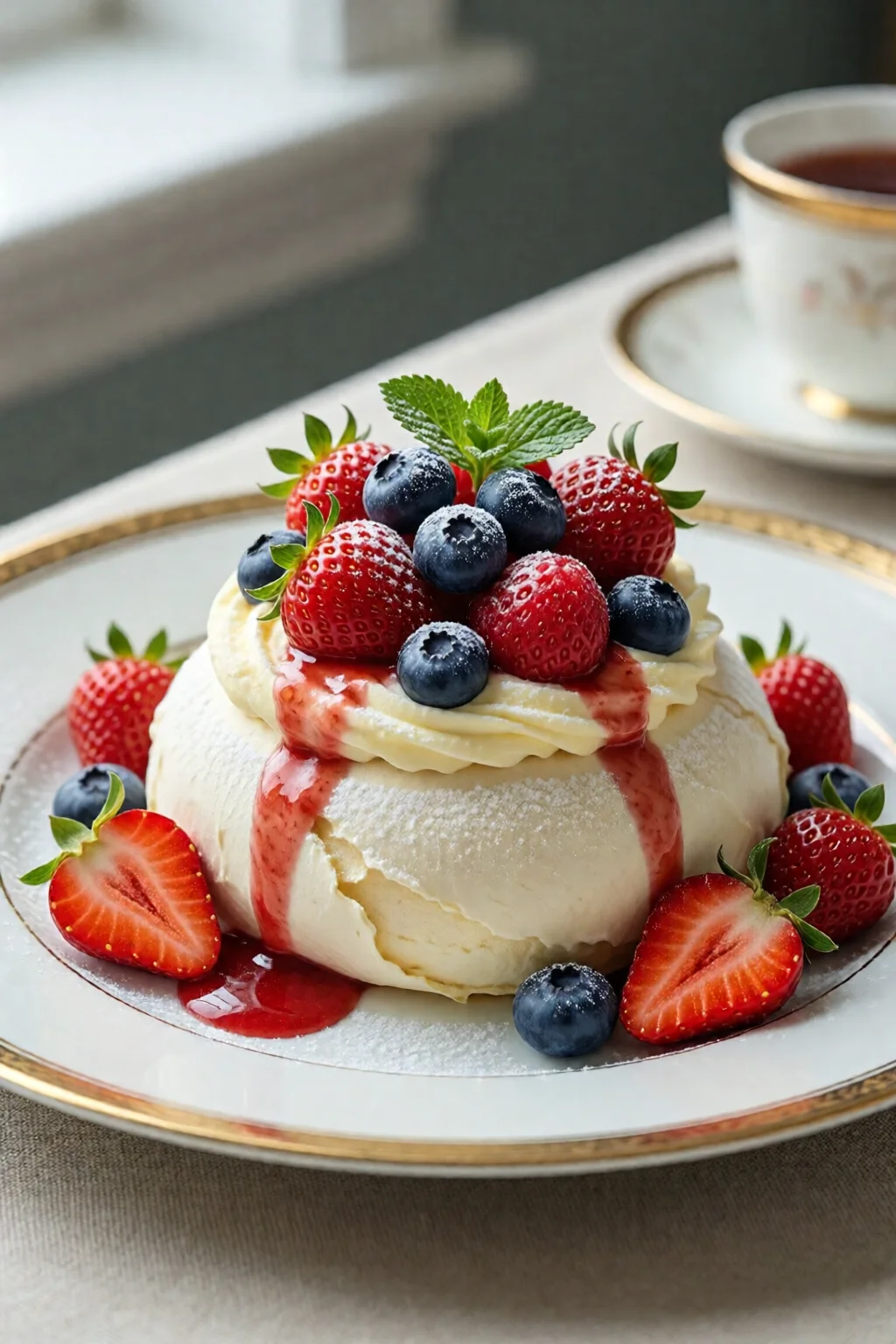
- Scatter the fresh berries on top, gently pressing them into the cream for stability.
- Serve immediately or store in the fridge for up to 4 hours; the crust stays crisp if kept away from moisture.
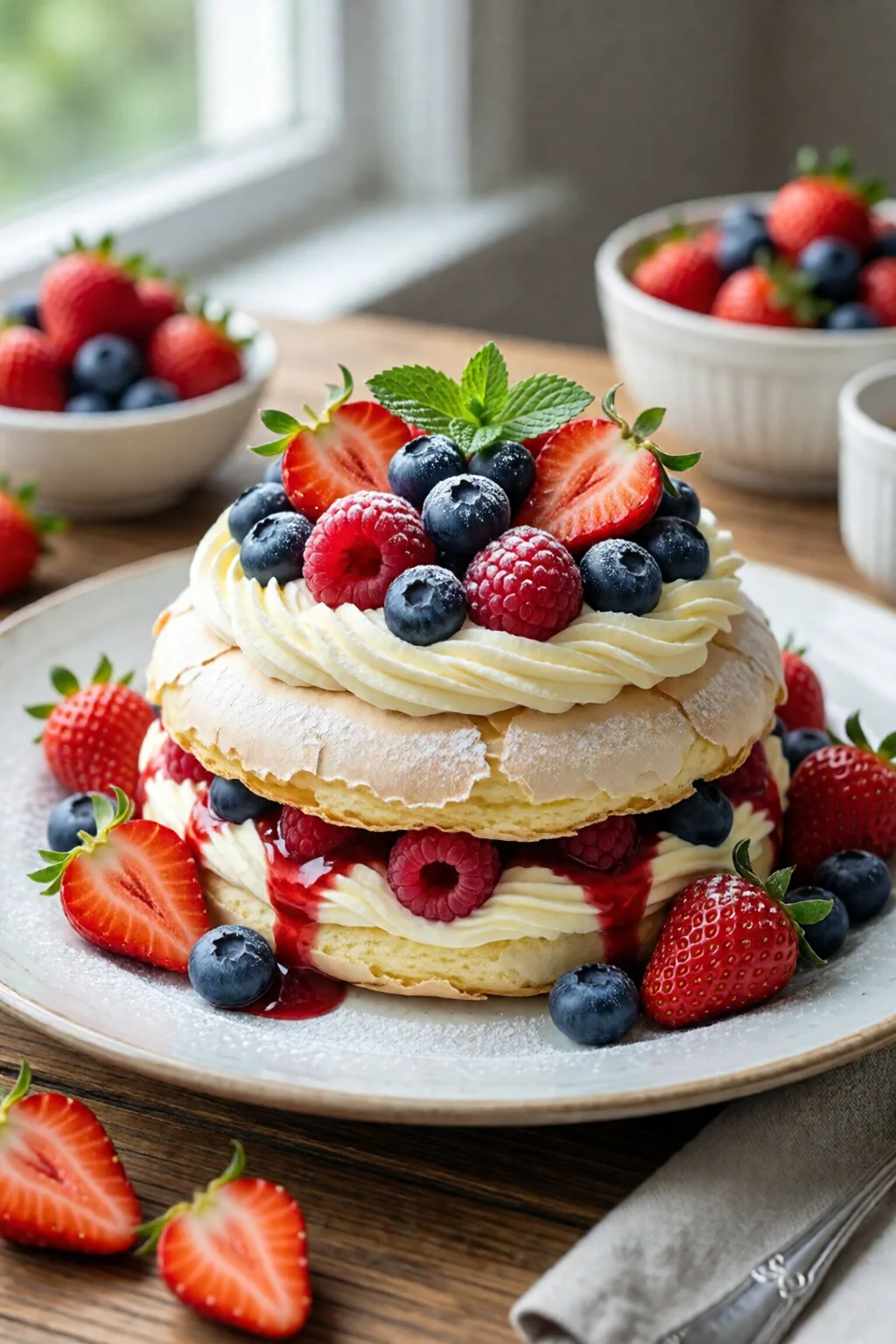
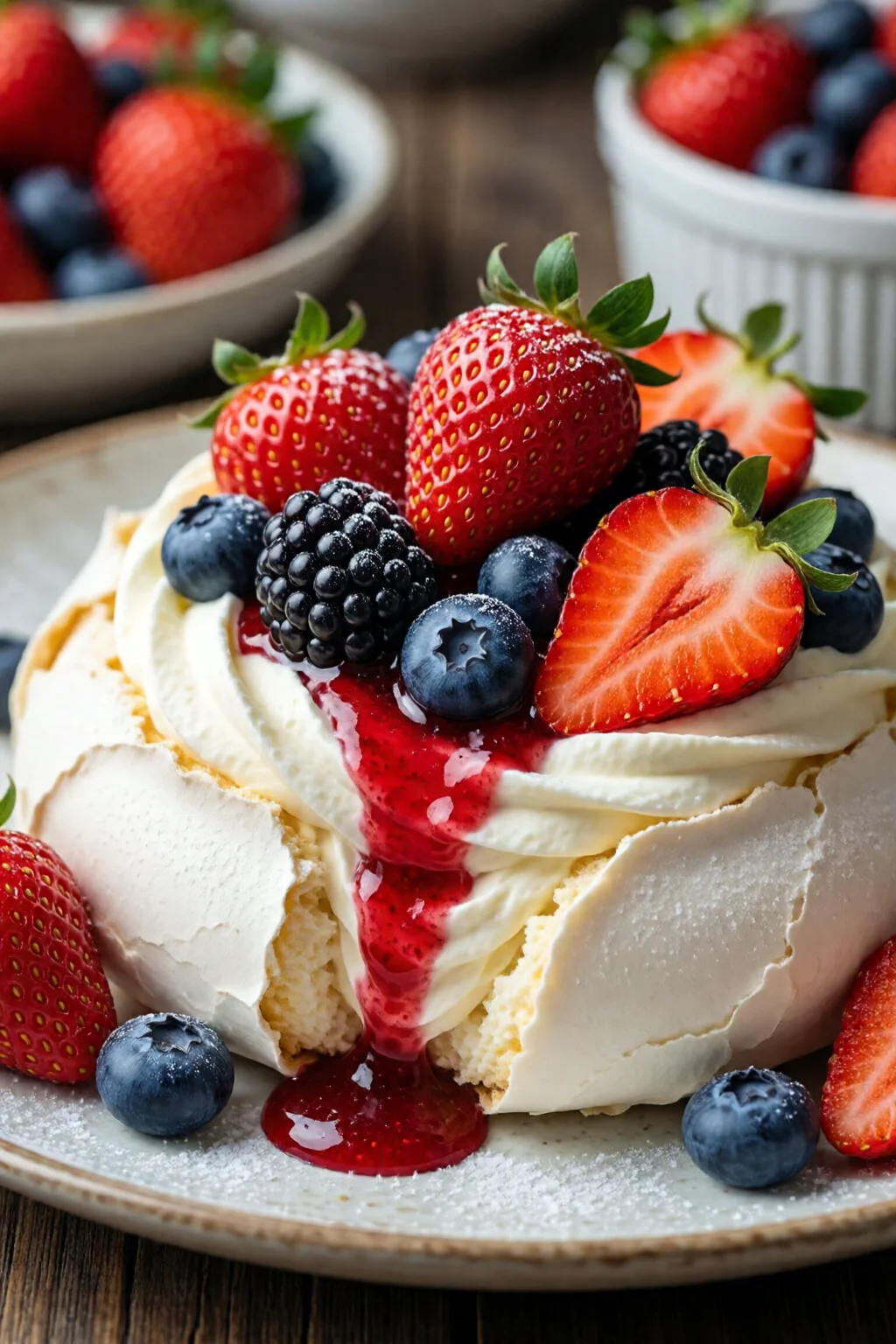
The result? A light, airy base with a buttery‑sweet crunch, topped with velvety cream and a burst of summer fruit. The visual contrast alone makes it Instagram‑ready.
Variations to Suit Every Palate
Seasonal Fruit Swaps
If berries aren’t in season, try mango‑passion fruit puree (2 Tbsp each) or a mix of kiwi and pomegranate seeds for a tropical twist. Adjust the sugar in the topping accordingly—tropical fruits can be sweeter, so reduce powdered sugar to 1 Tbsp.
Adding a Flavor Boost to the Meringue
Incorporate 1 tsp almond extract or a zest of lemon (from lemon bars recipe tangy and sweet) into the meringue for an extra aromatic layer. The citrus cuts through the sweetness and pairs beautifully with strawberries.
Gluten‑Free & Vegan Adaptations
For a vegan version, replace egg whites with Aquafaba (the liquid from a 15‑oz can of chickpeas, about $0.99). Whip 120 ml Aquafaba with ¼ tsp cream of tartar and follow the same sugar incorporation. Use coconut cream (chilled and whipped) instead of dairy cream. The texture remains surprisingly close to the classic.
Pro Tips from Our Experience
- Temperature consistency is king. Invest in an oven thermometer; many home ovens run 10–15 °C hotter than the dial.
- Don’t rush the sugar. Undissolved sugar creates gritty spots. Test by rubbing a small amount between your fingers—if it feels grainy, keep beating.
- Use a silicone spatula. It folds the starch and vinegar without deflating the meringue.
- Store berries properly. Keep them in a single layer on a paper towel in the fridge; excess moisture will seep into the meringue.
- Pre‑whip the cream. Chill the bowl and whisk for at least 10 minutes; this yields higher volume and stiffer peaks.
Equipment Comparison: Choosing the Right Oven
| Feature | Convection Oven (e.g., KitchenAid KCO255) | Standard Oven (e.g., GE JB645RKSS) | Countertop Convection Toaster (e.g., Breville BOV900BSS) |
|---|---|---|---|
| Price (USD) | $799 | $549 | $299 |
| Temperature Accuracy | ±2 °C | ±5 °C | ±4 °C |
| Even Heat Distribution | Excellent (fan circulates air) | Good (hot spots possible) | Fair (small chamber) |
| Capacity (L) | 45 L | 36 L | 2 L |
| Best For Pavlova? | ✔️ | ⚠️ May need rotation | ❌ Too small for 20 cm meringue |
My kitchen runs a KitchenAid convection oven, and the consistent low‑heat environment is why my pavlovas never collapse. If you have a standard oven, rotate the pan halfway through the bake to mimic convection.
Serving Ideas and Presentation
Plating for a Dinner Party
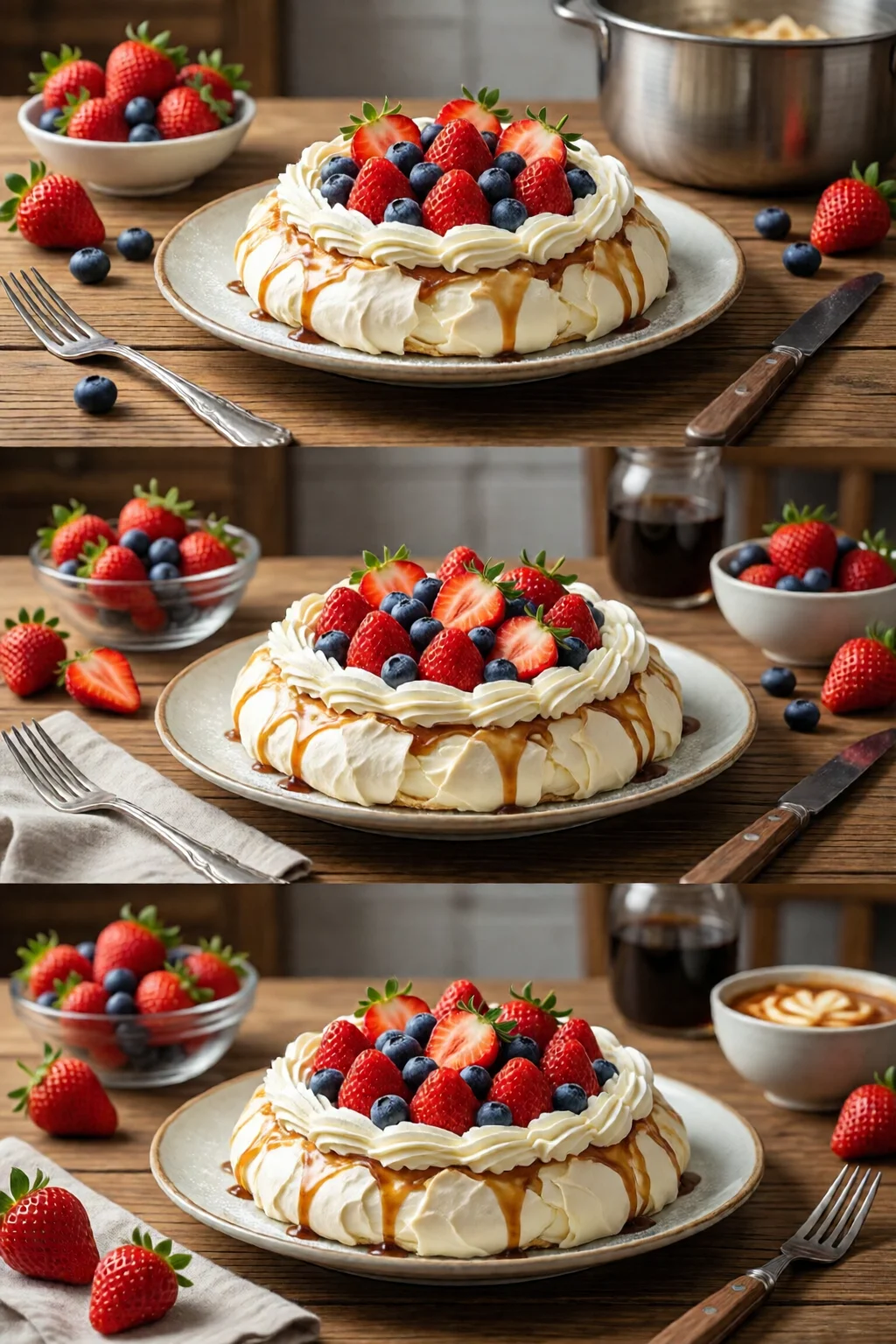
Place the finished pavlova on a marble slab, drizzle a light honey‑lavender glaze (1 Tbsp honey mixed with ½ tsp dried lavender buds, infused for 5 minutes), and garnish with mint leaves. The aroma adds a sophisticated layer without overwhelming the berries.
Breakfast Pavlova
Swap the whipped cream for Greek yogurt (200 g) sweetened with a drizzle of maple syrup. Top with sliced kiwi and a sprinkle of toasted almond slivers for a protein‑packed start to the day.
Mini Pavlovas for Kids
Use a muffin tin lined with parchment and make 12‑cm mini pavlovas. Let kids help spread a dollop of vanilla pudding and scatter colorful fruit loops for a fun twist.
Frequently Asked Questions
Can I make a pavlova ahead of time?
Yes. The meringue can be baked and stored in an airtight container at room temperature for up to 2 days. Add the whipped cream and berries just before serving to keep the crust crisp.
Why does my pavlova crack when I add the cream?
Cracking usually means the meringue is too dry or the cream is too cold. Warm the cream slightly (no more than 30 °C) and spread it gently. Also, make sure the meringue has fully cooled inside the oven before adding toppings.
What’s the best sugar for a pavlova?
Superfine caster sugar dissolves more readily than regular granulated sugar, reducing graininess. Brands like Domino Superfine work well and cost about $1.30 per lb.
Can I substitute fresh berries with frozen ones?
Yes, but thaw and pat them dry thoroughly. Frozen berries release extra moisture that can sog the meringue. A quick toss in a sieve with a pinch of cornstarch helps absorb excess juice.
Conclusion: Your Next Show‑Stopping Dessert
Armed with this pavlova recipe with fresh berries, you now have a reliable roadmap to a dessert that balances texture, flavor, and visual appeal. From ingredient selection to the final garnish, each step is designed to give you consistent, restaurant‑quality results at home. Try the classic version first, then experiment with the variations—your guests will thank you, and you’ll finally understand why this iconic meringue has stood the test of time.
Ready to slice into your first pavlova? Grab those fresh berries, preheat the oven, and let the magic begin. And if you’re craving another sweet adventure, check out our homemade pie crust recipe flaky for a buttery counterpart, or the easy crepe recipe sweet and savory for a versatile brunch option.